LV x OceanWell
Innovation through public-private partnership.
LVMWD imports 100% of its drinking water through the State Water Project, so nearly every drop of water that flows from your tap travels more than 400 miles from the Sierra Nevada Mountains before it reaches your home. When drought hits, that lack of a local water supply means that we are affected disproportionately.
That's why the LVMWD Board of Directors made a committment to diversify our water supply and find local, drought-proof sources of water that don't depend on snowpack, rainfall, or state allocations. An emerging method of ocean desalination could be one of those sources.
Our Timely Collaboration
In 2023, LVMWD partnered with OceanWell, an innovative water technology company, to explore subsea ocean desalination. The partnership is comprised of a three-stage path: a reservoir pilot, an open-ocean demonstration, and ultimately a full commercial water supply.
Read the full final report of the pilot studyHow It Works
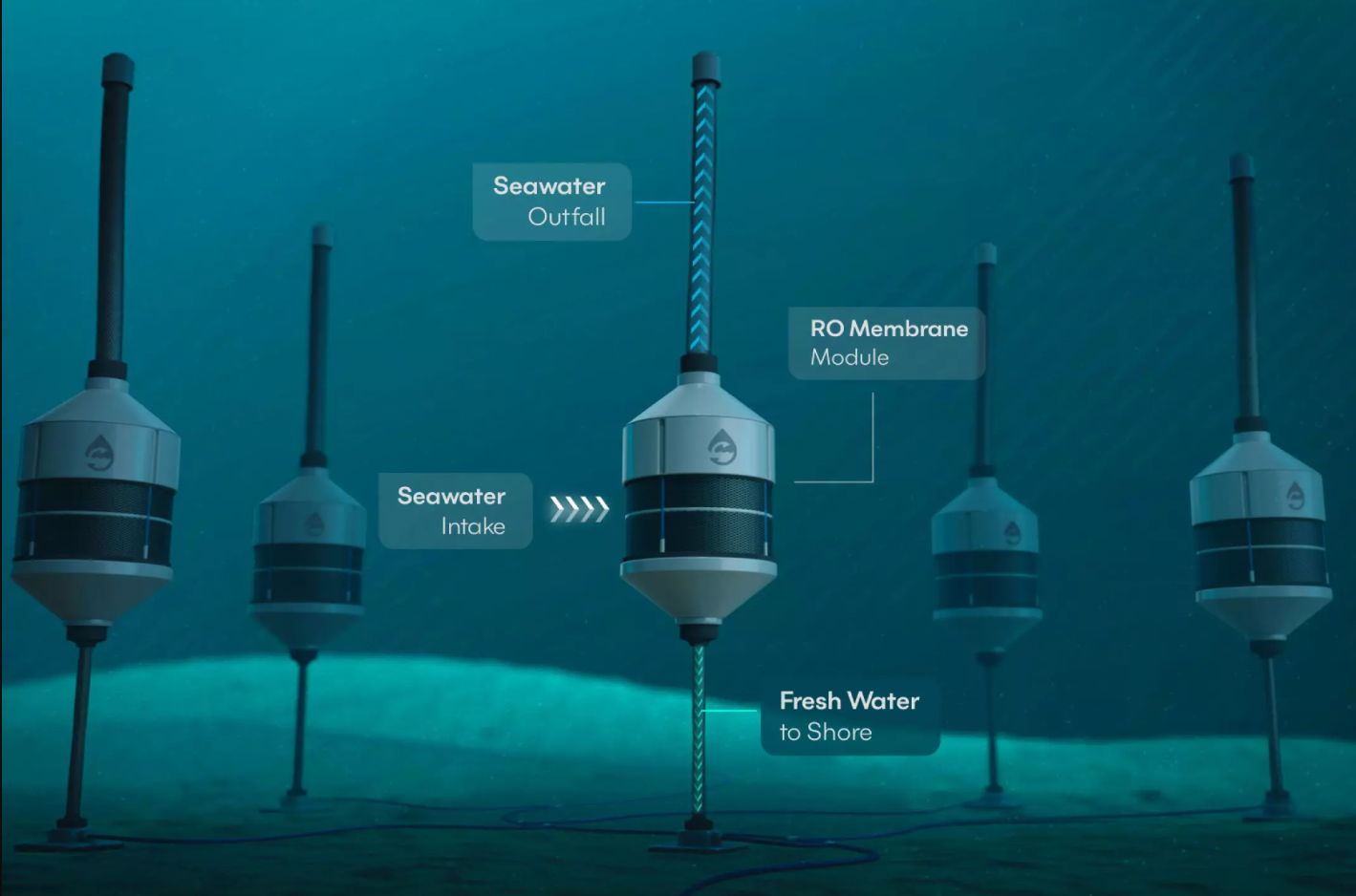
Modular underwater pods are deployed completely beneath the surface and quietly produce clean, fresh drinking water and pipe it to shore. Each pod uses the ocean's own natural pressure to filter seawater, and is designed to protect marine life while requiring nearly half the amount of energy used by traditional desalination methods.
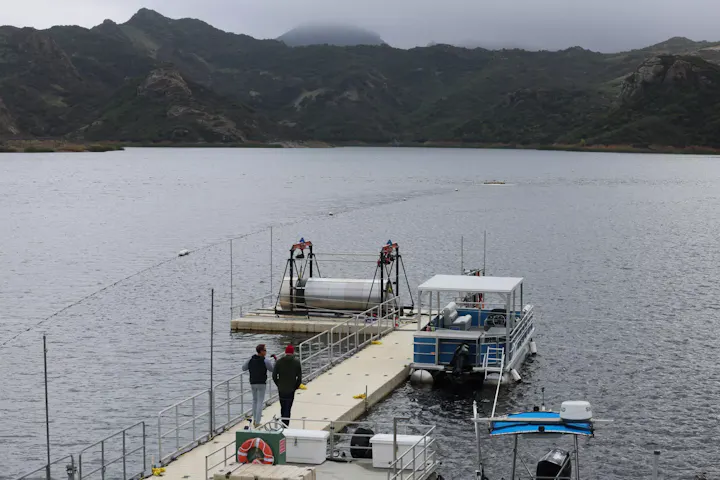
To test how the technology performs in a biologically active, real-world environment, we submerged one of these pods in the Las Virgenes Reservoir — where it was exposed to algae blooms, wind, rain, and changing temperatures — before any deployment in the ocean. The pilot ran for three months and the results exceeded expectations.
By The Numbers
Key Takeaways from the Pilot
1. The water is pure and the system is reliable
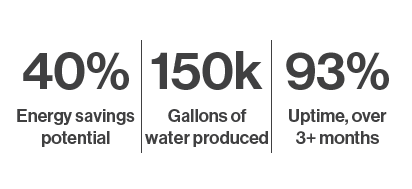
During three months of continuous operation, the pod maintained 93% uptime and produced over 150,000 gallons of water 10x purer than drinking water standards.
2. the technology protects marine life
Strong preliminary data showed the LifeSafe™ intake system effectively protects marine life from impingement and microorganisms can be returned from the intake system back to their habitat, unharmed.
3. the process is energy efficient
The pilot system operated effectively while using 40% less energy than traditional desalination systems.
Next Steps
The reservoir pilot was an important and succesful first step, and it delivered the real-world data that state regulators need to evaluate this technology for broader use. LVMWD is now actively engaging with the State regulatory agencies to help shape a responsible, science-based permitting pathway for offshore desalination in California.
The goal? A transparent path toward a potential full-scale OceanWell "Water Farm" located a few miles off the coast of Malibu, with the potential to produce up to 15% of the District's drinking water supply. Any future investment will be carefully evaluated to balance reliability, environmental stewardship, and cost for ratepayers.
What This Means for You
LVMWD is not waiting for the next drought to act. By investing in environment first, science-based innovation today, the District is working to ensure that your water supply is secure no matter what California's climate brings. Ocean desalination won't replace conservation or water recycling, but it could become an important piece of a balanced, long-term water future for our community.
Resources
Oceanwell-LV Final Report -Brochure.pdfOceanWell USBR Final Technical Report.pdf